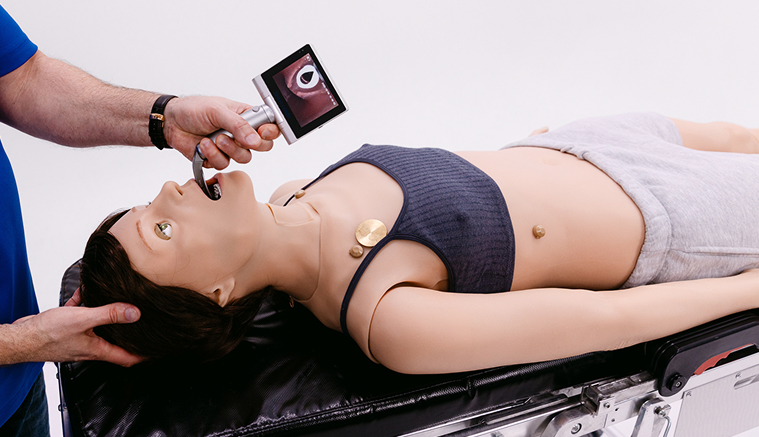
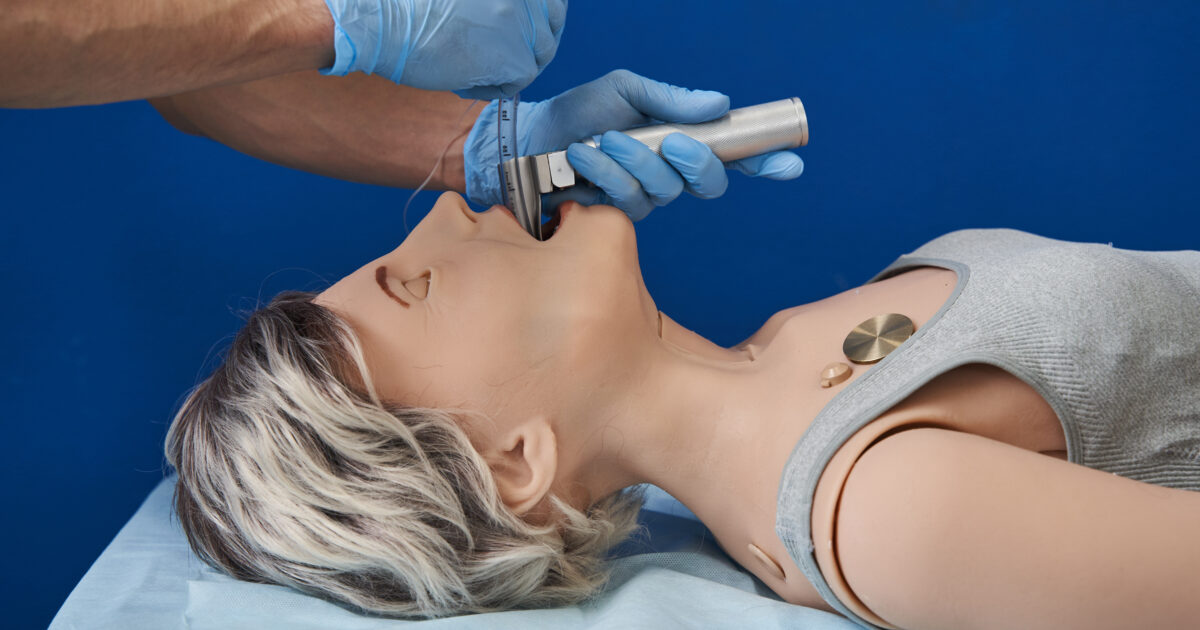
ADVANCED LIFE SUPPORT SIMULATION · MEDVISION, RUSSIA
Lisa ALS
Rehearse the scenario. Prepare the team.
A female adult patient simulator by MedVision for practical clinical training. Axes Medverse works in close collaboration with MedVision Russia for product supply.
Lisa ALS brings multiple clinical training functions into a realistic adult patient model. Its documented capabilities include airway and respiration, circulation, CPR, auscultation and selected access or medication-administration training features. The educational value depends on a carefully designed scenario, trained facilitation and feedback—not simply the number of functions in the manikin.
A good fit for: Medical, nursing, emergency-care and clinical-skills programmes seeking adult patient scenario training and advanced life support simulation.
Female Lisa ALS manikin · MedVision
EXPLORE THE POSSIBILITIES
Make the scenario worth discussing.
A patient simulator becomes most useful when the session is tied to a defined objective. Plan the cues, decisions and communication behaviours you want to observe, then use the simulator’s data and the team’s own observations to support a reflective debrief.
02 / CAPABILITIES IN CONTEXT
Look closer. Discover what matters.
01
Realistic patient presentation
Features include anatomically proportioned adult female appearance, realistic skin texture and materials designed for repeated training. This can help a scenario feel coherent while instructors focus learners on relevant clinical cues.
02
Airway & respiration
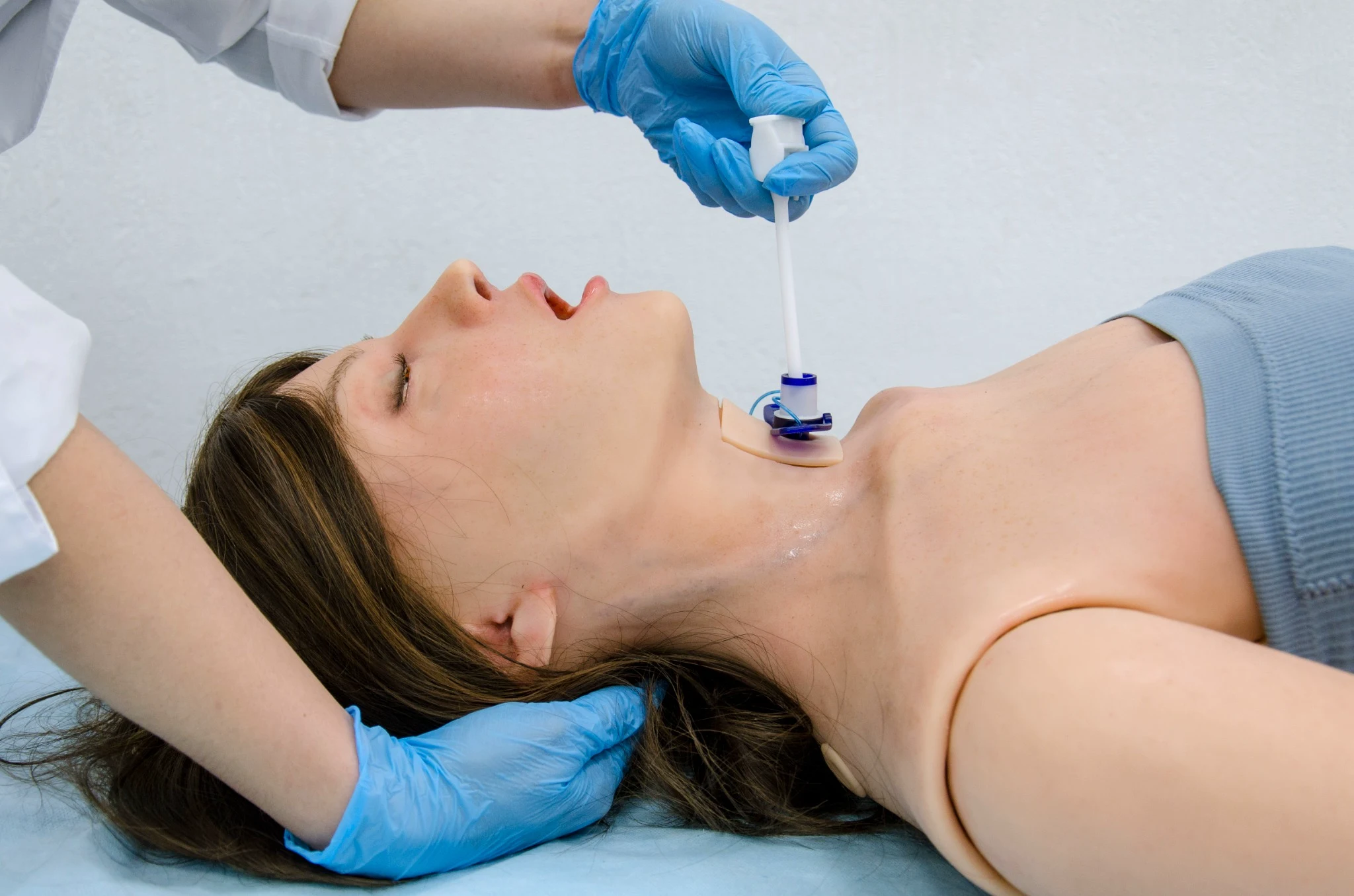
The official specification lists realistic airway features, spontaneous breathing, chest excursion and compatibility with mechanical ventilation. These functions support instructor-led learning scenarios; exact functions and equipment compatibility must be checked for the proposed configuration.
03
Circulation & monitoring
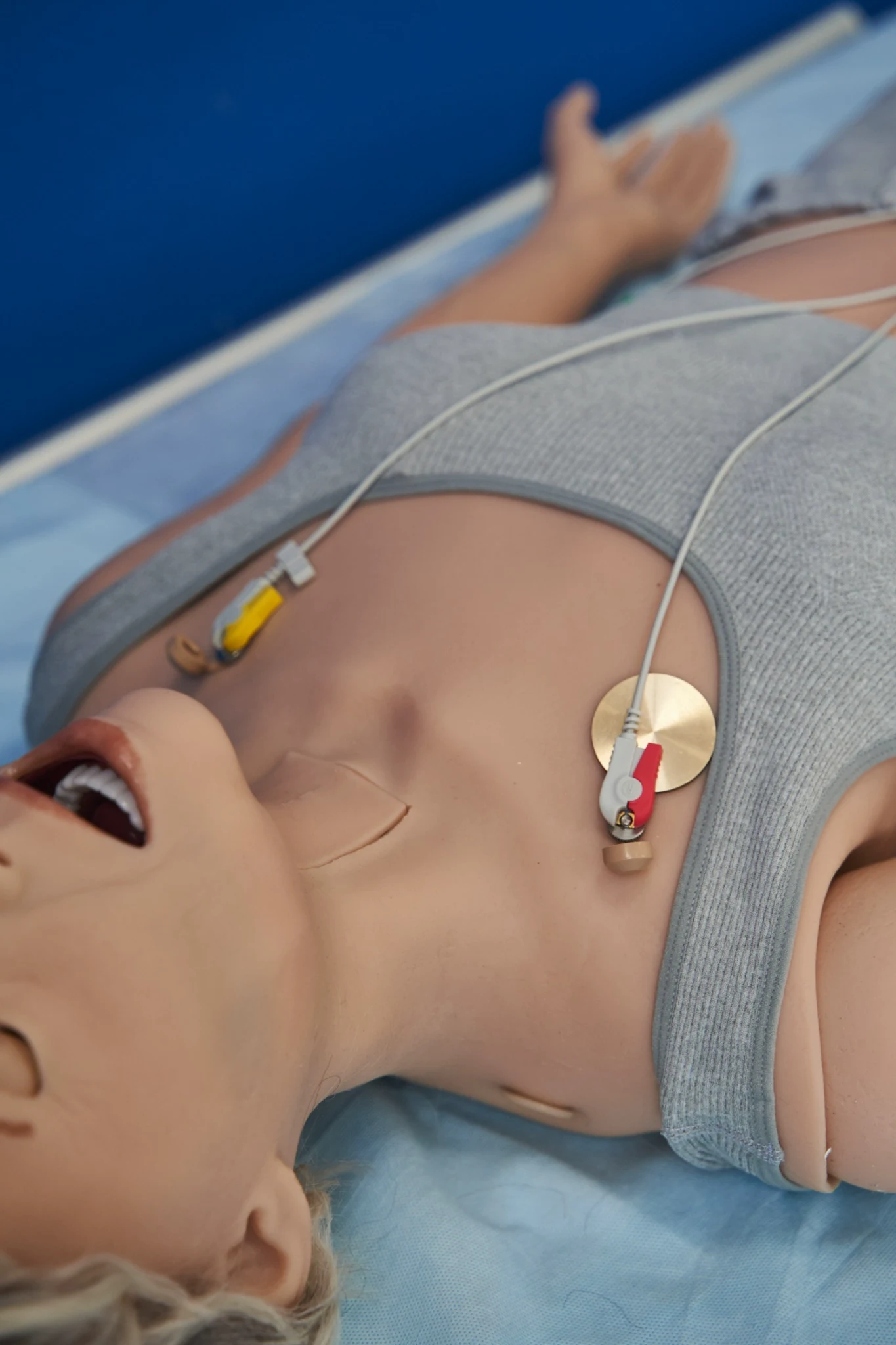
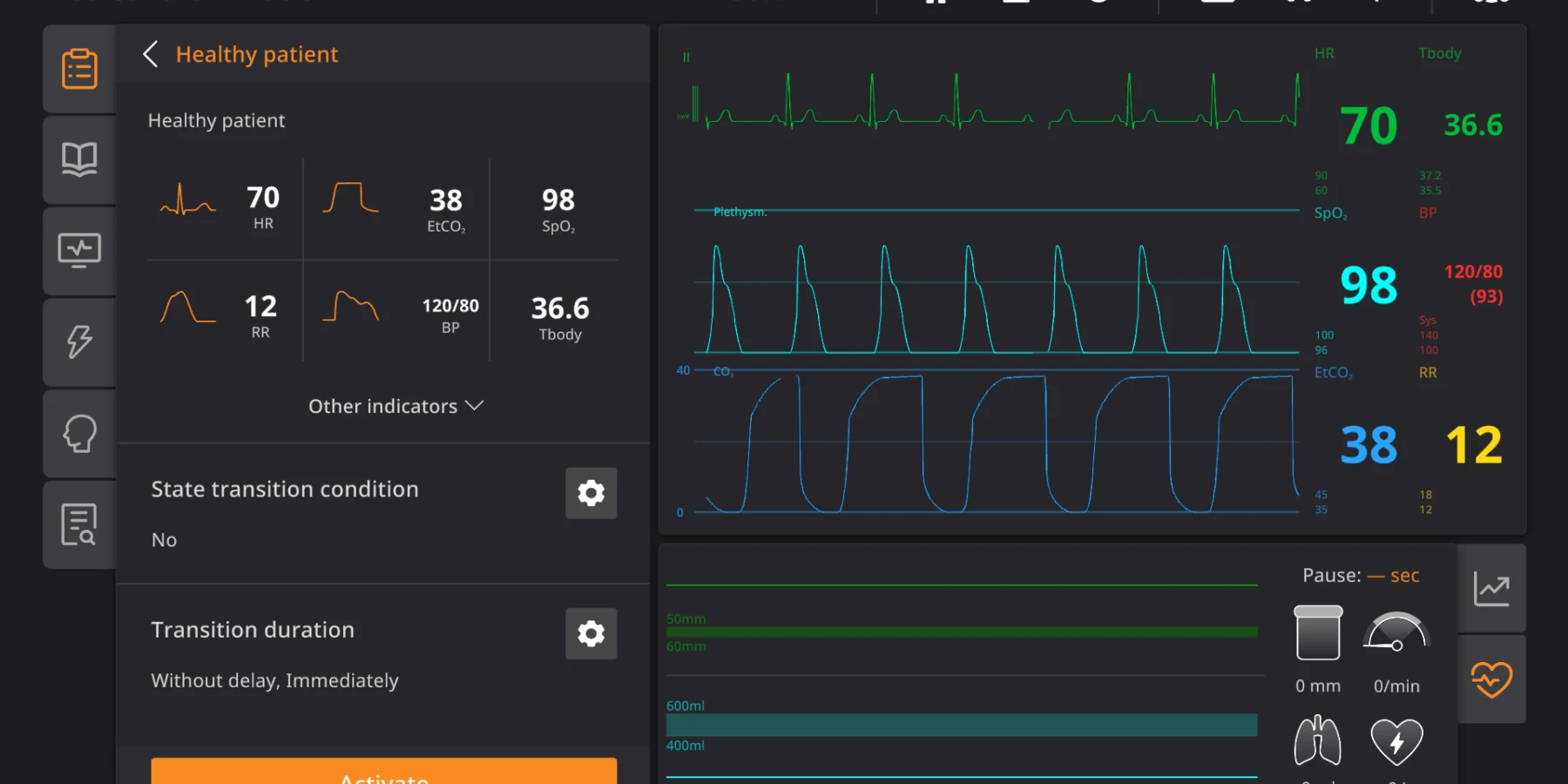
Documented features include palpable radial, carotid and femoral pulses, ECG monitoring and central cyanosis. Scenarios can connect observation and monitoring information with a discussion of the learner’s assessment and priorities.
04
Defibrillation & pacing
Features include defibrillation and pacing using clinical devices. Institutions should verify approved equipment, connection requirements and operational safety instructions with MedVision before using any equipment with the simulator.
05
CPR feedback
The platform records compression rate and depth, ventilation measures and an event log. Faculty can use recorded information during a structured debrief rather than relying only on impressions of performance.
06
Auscultation & communication
Heart, lung and bowel sounds are documented, along with an integrated speaker and microphone. These functions can support observation, communication and patient-interaction objectives in a facilitated scenario.
07
Access & medication training
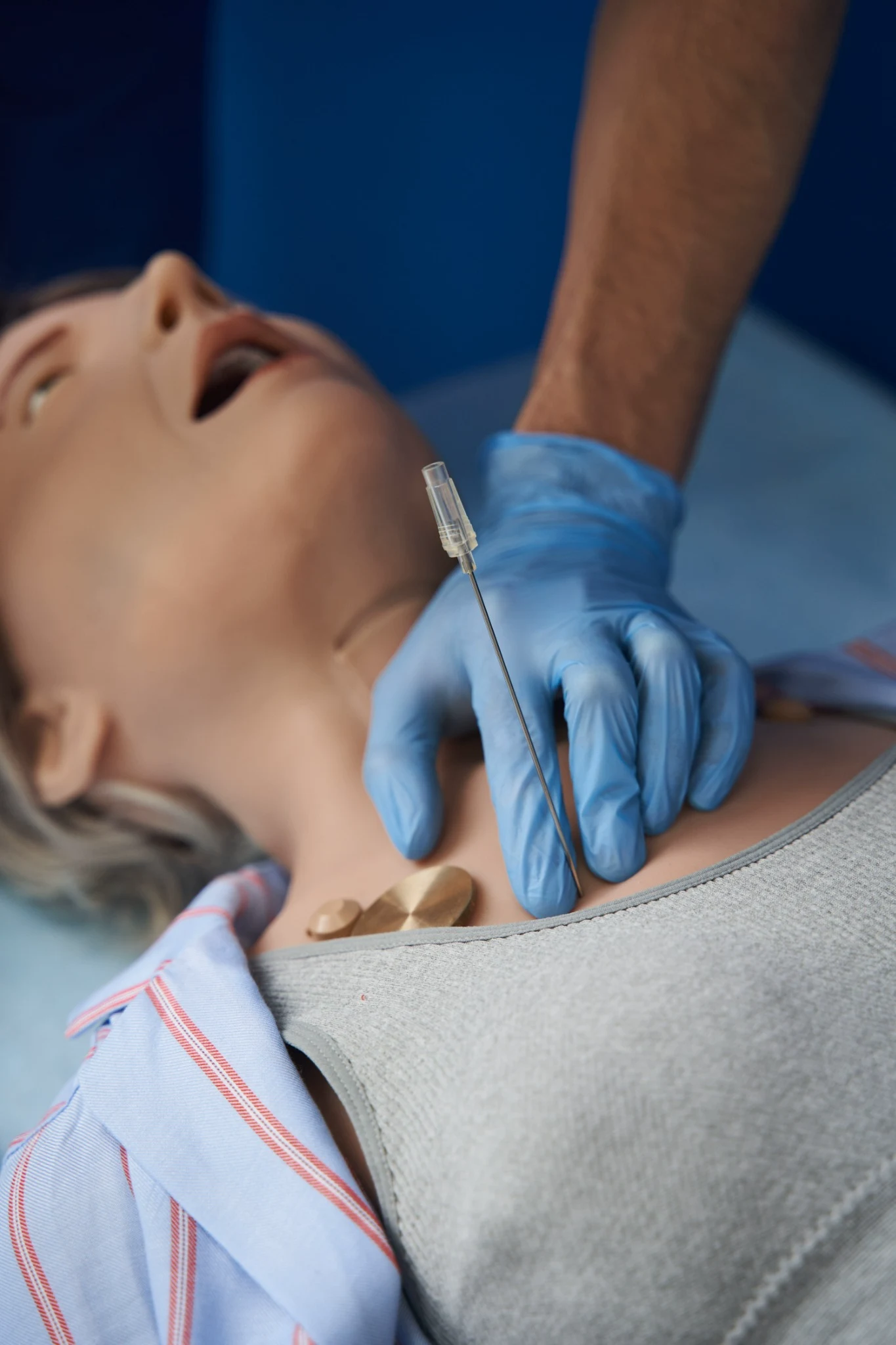
The official specification includes selected IV, venipuncture, IM and IO training functions. Confirm the supplied access sites, consumables and replacement components; use only the manufacturer’s permitted fluids and procedures.
08
Instructor software & mobility
Features include intuitive software control and wireless operation. Plan instructor preparation, room layout and equipment checks before scenarios. Battery duration differs between published materials, so request the current specification for the exact model.
03 / FROM THE PRODUCT TO THE LESSON
A more considered learning workflow.
01
Set up the scenario
Choose the learning objective and required functions. Check the simulator, permitted clinical devices, consumables and room arrangement against manufacturer guidance.
02
Facilitate the encounter
Orient learners to the environment and explain its limitations. Use instructor control and patient cues to support the scenario without unnecessary complexity.
03
Debrief with evidence
Review observations, team decisions and relevant performance records. Separate developmental feedback from any formal assessment process.
04 / LET’S GET THE DETAILS RIGHT
Plan the whole experience.
Share your curriculum, learner numbers, room layout, intended teaching activities and existing equipment. We can then discuss the appropriate solution and the details that need to be confirmed.
Required model, software edition and modules
Device compatibility, space and installation needs
Licences, consumables and replacement components
Demonstration, training, delivery and support scope
Explore spontaneous breathing, chest movement, ventilation interaction and airway assessment features. Match accessories and permitted equipment to the manufacturer’s configuration.
Circulation and patient monitoring
Teach assessment of pulses, blood pressure, ECG and changes in patient state. Review monitoring integration and defibrillation or pacing capabilities during a demonstration.
CPR and procedural access
Review compression and ventilation feedback alongside documented vascular access, injection and other procedural training options. Confirm which features and consumables ship with the selected model.
Instructor control and debrief
Run prepared or instructor-led scenarios, adjust physiological parameters and review performance. Check control software, logs, monitor options, transport, power and included hardware with MedVision.
Lisa ALS is a MedVision product. Axes Medverse’s role is product supply collaboration and institutional solution planning. The manufacturer’s current documentation and written quotation determine the delivered configuration, compatible devices, training and commercial terms.