Let’s talk ↗
Our storyCustom labsInnovationOur solutionsResearchLearning hubFAQsCareersContact us
SIMULATION LEARNING HUB

Why simulation matters

Explore patient safety data, research on simulation-based training, and practical ways to use the evidence in your institution.

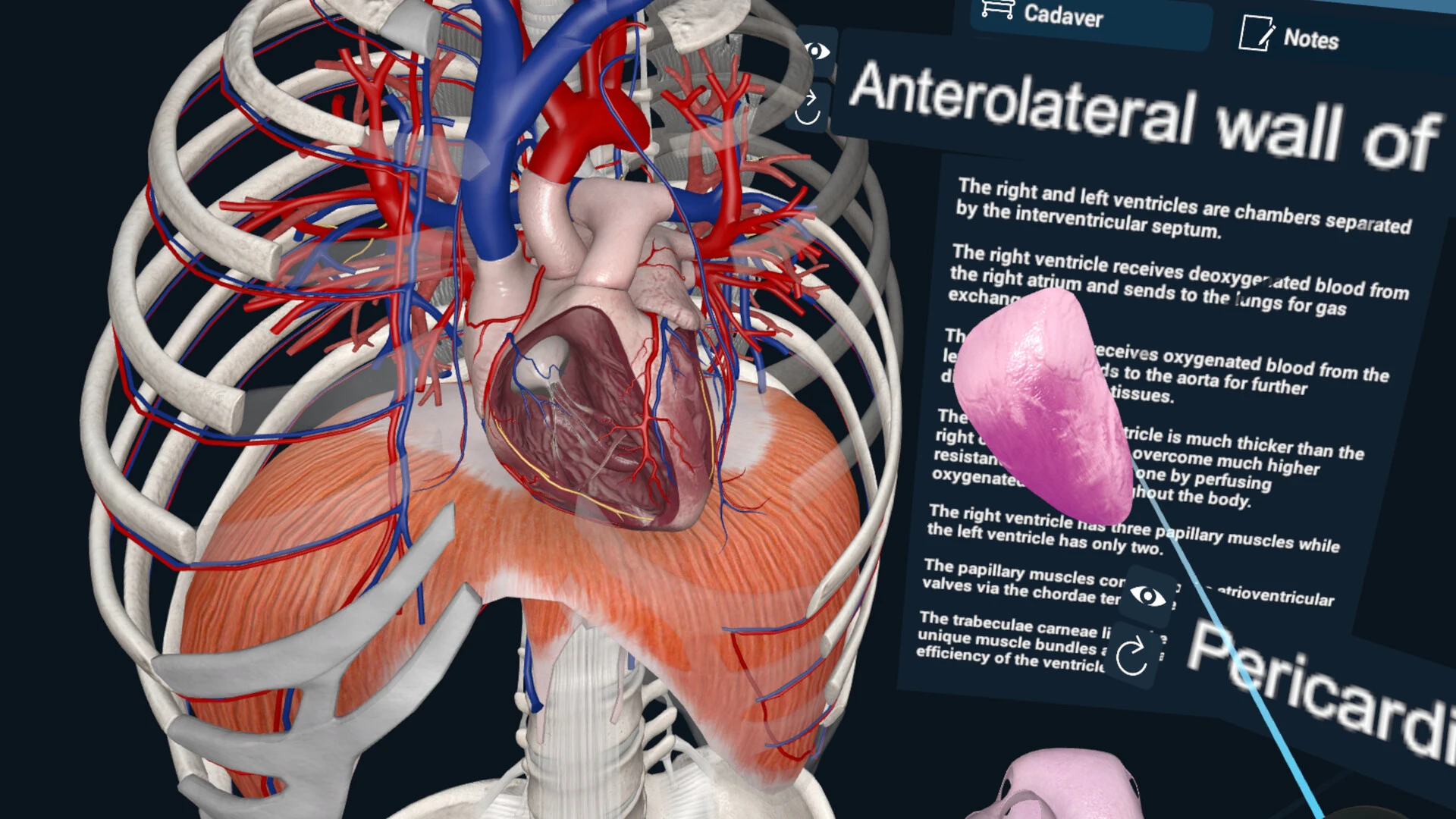
Interactive anatomy supports structure recognition and discussion

Why practice matters

Students and clinicians need a way to repeat rare, difficult or time-sensitive situations before caring for a patient or an animal.

Simulation creates time to practise, receive feedback and try again. The WHO figures describe harm from unsafe care across health systems. Research does not establish a global mortality rate caused solely by insufficient hands-on practice.

Explore the evidence
Patients harmed in health care · global estimate
About 1 in 10

WHO patient safety fact sheet, 2023

Three ways to explore

EVIDENCE / WHAT THE RESULTS MEAN

Read the outcomes carefully

Simulation research can measure knowledge, demonstrated skills, clinical behaviour or patient outcomes. These are different endpoints. The studies below help explain both the opportunity and the limits.

Technical skill and complications

Birkmeyer and colleagues examined the relationship between assessed surgical skill and bariatric surgery outcomes. The association supports attention to technical performance; this observational study does not establish a global mortality rate caused by insufficient practice.

Read the study ↗

Practice with feedback

This comparative review examines simulation with deliberate practice versus traditional clinical education. It is useful when considering structured repetition and feedback, rather than equipment purchase alone, as part of an educational programme.

Read the study ↗

Clinical procedure outcomes

A central venous catheter mastery-learning study reported fewer complications following training in its setting. Consider the specific procedure, study design and local implementation before generalising the result to other skills or institutions.

Read the study ↗

Veterinary learning

A veterinary education meta-analysis found results favouring simulation across the outcomes studied. The effect varied with study and instructional design. It supports purposeful curriculum integration rather than a claim that every model produces the same result.

Read the study ↗

Mortality effects are not uniform

A stepped-wedge obstetric training trial did not find a statistically significant change in combined maternal and perinatal mortality. This is an important reminder that an educational intervention may not change every downstream clinical outcome.

Read the study ↗

Specific benefits and uncertainty

The Cochrane review of obstetric team training found potential benefits for some outcomes, alongside uncertainty and limitations in the evidence. Read each endpoint and its certainty rather than treating simulation as a universal guarantee of better outcomes.

Read the study ↗
50 PAPERS / MEDICAL & VETERINARY SIMULATION

Explore the research

A curated starting library spanning teaching design, procedural training, veterinary education, immersive anatomy and patient outcomes. Each entry links to its indexed record. Study designs and measured outcomes differ; this collection is not a new systematic review or an endorsement of a particular product.

50 of 50 papers

  1. Skills & patient outcomes · 2025

    Mono-Professional Simulation-Based Obstetric Training in a Low-Resource Setting: Stepped-Wedge Cluster Randomized Trial.

    van Tetering AAC, de Vries EL, Ntuyo P et al. · JMIR medical education · Randomised trial

  2. Veterinary education · 2024

    Links between learning goals, learning activities, and learning outcomes in simulation-based clinical skills training: a systematic review of the veterinary literature.

    Veenema NJ, Hierck BP, Bok HGJ et al. · Frontiers in veterinary science · Systematic review

  3. Skills & patient outcomes · 2022

    Simulation Based vs Conventional Training for Initial Steps in Delivery Room Care of Preterm Neonates: An Open Label Randomized Trial.

    Neupane D, Sharma A, Thukral A et al. · Indian pediatrics · Randomised trial

  4. Skills & patient outcomes · 2021

    Simulation-Based Neonatal Resuscitation Team Training: A Systematic Review.

    Lindhard MS, Thim S, Laursen HS et al. · Pediatrics · Systematic review

  5. Veterinary education · 2022

    Comparative Effectiveness of Training with Simulators Versus Traditional Instruction in Veterinary Education: Meta-Analysis and Systematic Review.

    Noyes JA, Carbonneau KJ, Matthew SM. · Journal of veterinary medical education · Meta-analysis

  6. Skills & patient outcomes · 2020

    Multi-professional simulation-based team training in obstetric emergencies for improving patient outcomes and trainees' performance.

    Fransen AF, van de Ven J, Banga FR et al. · The Cochrane database of systematic reviews · Meta-analysis

  7. Skills & patient outcomes · 2017

    Simulation-based team training for multi-professional obstetric care teams to improve patient outcome: a multicentre, cluster randomised controlled trial.

    Fransen AF, van de Ven J, Schuit E et al. · BJOG : an international journal of obstetrics and gynaecology · Research article

  8. Skills & patient outcomes · 2016

    Impact Evaluation of PRONTO Mexico: A Simulation-Based Program in Obstetric and Neonatal Emergencies and Team Training.

    Walker DM, Cohen SR, Fritz J et al. · Simulation in healthcare : journal of the Society for Simulation in Healthcare · Randomised trial

  9. Skills & patient outcomes · 2015

    Linking simulation-based educational assessments and patient-related outcomes: a systematic review and meta-analysis.

    Brydges R, Hatala R, Zendejas B et al. · Academic medicine : journal of the Association of American Medical Colleges · Meta-analysis

  10. Foundations & instructional design · 2014

    How much evidence does it take? A cumulative meta-analysis of outcomes of simulation-based education.

    Cook DA. · Medical education · Meta-analysis

  11. Skills & patient outcomes · 2013

    Surgical skill and complication rates after bariatric surgery.

    Birkmeyer JD, Finks JF, O'Reilly A et al. · The New England journal of medicine · Research article

  12. Foundations & instructional design · 2013

    Mastery learning for health professionals using technology-enhanced simulation: a systematic review and meta-analysis.

    Cook DA, Brydges R, Zendejas B et al. · Academic medicine : journal of the Association of American Medical Colleges · Meta-analysis

  13. Skills & patient outcomes · 2013

    Patient outcomes in simulation-based medical education: a systematic review.

    Zendejas B, Brydges R, Wang AT et al. · Journal of general internal medicine · Systematic review

  14. Foundations & instructional design · 2012

    Comparative effectiveness of technology-enhanced simulation versus other instructional methods: a systematic review and meta-analysis.

    Cook DA, Brydges R, Hamstra SJ et al. · Simulation in healthcare : journal of the Society for Simulation in Healthcare · Meta-analysis

  15. Foundations & instructional design · 2013

    Comparative effectiveness of instructional design features in simulation-based education: systematic review and meta-analysis.

    Cook DA, Hamstra SJ, Brydges R et al. · Medical teacher · Meta-analysis

  16. Foundations & instructional design · 2011

    Technology-enhanced simulation for health professions education: a systematic review and meta-analysis.

    Cook DA, Hatala R, Brydges R et al. · JAMA · Meta-analysis

  17. Foundations & instructional design · 2011

    Does simulation-based medical education with deliberate practice yield better results than traditional clinical education? A meta-analytic comparative review of the evidence.

    McGaghie WC, Issenberg SB, Cohen ER et al. · Academic medicine : journal of the Association of American Medical Colleges · Meta-analysis

  18. Foundations & instructional design · 2010

    Computerized virtual patients in health professions education: a systematic review and meta-analysis.

    Cook DA, Erwin PJ, Triola MM. · Academic medicine : journal of the Association of American Medical Colleges · Meta-analysis

  19. Skills & patient outcomes · 2009

    Simulation-based mastery learning reduces complications during central venous catheter insertion in a medical intensive care unit.

    Barsuk JH, McGaghie WC, Cohen ER et al. · Critical care medicine · Research article

  20. Veterinary education · 2026

    Skillful Handling and Accurate Positioning in Echographic Simulation (SHAPES): Assessment of an Ultrasound Training Simulator for Teaching Basic Ultrasound Use.

    McGaffey M, Zur Linden A, Khosa D et al. · Journal of veterinary medical education · Research article

  21. Veterinary education · 2026

    A low-cost balloon-based simulator for teaching surgical knot techniques to veterinary students.

    Pérez-Rivero JJ, Cruz-Gutiérrez G, Heuze de Icaza IM et al. · Alternatives to laboratory animals : ATLA · Research article

  22. Veterinary education · 2026

    Physical simulation models for veterinary surgical training: a systematic review.

    Salas-Guerra J, Sánchez-Margallo JA, Durán-Rey D et al. · Frontiers in veterinary science · Systematic review

  23. Veterinary education · 2026

    Physical models and simulators in veterinary education: current status, learning impact, and future perspectives.

    Suñol A, Sivolapenko D, Fernandez-Novo A et al. · Frontiers in veterinary science · Review

  24. Veterinary education · 2026

    Design and Implementation of an Educational Escape Room for Clinical Simulation in Veterinary Emergency Training: Students' Perceptions.

    Del Río-Martínez C, Bonastre C, López-Mínguez S et al. · Journal of veterinary medical education · Research article

  25. Veterinary education · 2026

    Thoracic limb simulator for veterinary vascular access training.

    Espinha ACN, Piolla J, Marinho PC et al. · Acta cirurgica brasileira · Research article

  26. Veterinary education · 2026

    Exploring Competency Development Through Simulation-Based Preclinical Training in Veterinary Education.

    Galarza-Alvarado P, Moya-Loaiza DP, Ramonet F et al. · Veterinary sciences · Research article

  27. Veterinary education · 2026

    Veterinary Student Experience and Learning Using a 4D Electrocardiogram Simulator.

    Reid A, Dukes-McEwan J. · Journal of veterinary medical education · Research article

  28. Veterinary education · 2026

    Simulation, artificial intelligence, and competency-based frameworks in veterinary medical education: a narrative review.

    Zhang H, Li A, Li Y et al. · Journal of veterinary science · Review

  29. Veterinary education · 2025

    Educational Impact of a 3D Canine Vascular Simulator for Learning Anatomy and Interventional Radiology Techniques in Veterinary Training.

    Lopez-Minguez S, Urbano I, de Blas I et al. · Veterinary sciences · Research article

  30. Resuscitation & team training · 2026

    Rapid Cycle Deliberate Practice Versus Conventional Simulation for Neonatal Resuscitation Training: A Randomized Controlled Trial.

    Nagaraju C, Sundaram V, Kumar J et al. · Simulation in healthcare : journal of the Society for Simulation in Healthcare · Research article

  31. Resuscitation & team training · 2026

    Improving team performance in neonatal resuscitation: a systematic review of training programs.

    Neethling J, Lubbe W, Scholtz S et al. · Maternal health, neonatology and perinatology · Review

  32. Resuscitation & team training · 2026

    Simulation-based Team Training Effects on Clinical Performance and Patient Outcomes: Systematic Review of Controlled Studies.

    Schram A, Schram A, Lauridsen KG et al. · Simulation in healthcare : journal of the Society for Simulation in Healthcare · Research article

  33. Resuscitation & team training · 2026

    Comparing teaching methods on novice nurses' and medical residents' resuscitation teamwork knowledge and team performance: A longitudinal randomized controlled trial.

    Chen HW, Guo SL, Chen CY et al. · Nurse education in practice · Randomised trial

  34. Resuscitation & team training · 2026

    Checklist- and algorithm-based simulation training produce comparable improvements in teamwork-related shared mental models: a cluster-randomized study in trauma resuscitation teams.

    Beaugé Y, Kusch S, Thorsson L et al. · European journal of trauma and emergency surgery : official publication of the European Trauma Society · Randomised trial

  35. Resuscitation & team training · 2026

    Effect of an app-guided advanced cardiac life support algorithm on teamwork, non-technical skills, and workload in simulated in-hospital cardiac arrest: a randomized controlled feasibility trial.

    Kamphausen A, Pilz M, Baumgärtel M et al. · Scandinavian journal of trauma, resuscitation and emergency medicine · Randomised trial

  36. Resuscitation & team training · 2026

    Enhancing High-Fidelity Simulation Flight-Based Training for Critical Care Paramedics in EMS Aviation: A Systematic Review.

    Hilditch M, Sharpe C, Litwack K et al. · Air medical journal · Systematic review

  37. Immersive & anatomy learning · 2026

    Intraoperative Teaching in Robotic-Assisted Surgery-A Systematic Review.

    Kieslich AK, Jardine R, Ibrahim H et al. · Journal of clinical medicine · Review

  38. Immersive & anatomy learning · 2026

    A Scoping Review on the Evidence for Virtual Reality Simulation in Surgical Training.

    Gold MS, Colucci E, Laor B et al. · Journal of surgical education · Research article

  39. Immersive & anatomy learning · 2026

    Effect of virtual reality on spatial-anatomical understanding in preoperative liver surgery: a randomized crossover study.

    Zolkin A, Rüger C, Remde C et al. · Scientific reports · Randomised trial

  40. Immersive & anatomy learning · 2026

    Learning facial muscle anatomy using virtual reality simulation: a randomized controlled study among medical students in Iraq.

    Al-Fayyadh F, Jabar AASA, Gilányi A. · Advances in simulation (London, England) · Research article

  41. Immersive & anatomy learning · 2026

    Metaverse-based virtual reality and spatial learning in cervicofacial anatomy: A curriculum-embedded comparative study in undergraduate medical students.

    Ito T, Kawasaki H, Yamazaki A et al. · Anatomical sciences education · Research article

  42. Immersive & anatomy learning · 2026

    Gamification With Progress Bars Improves Performance and Retention in Virtual Reality Simulation: A Randomized, Controlled Trial.

    Nøhr A, Mikkelsen PT, Sørensen MS et al. · Simulation in healthcare : journal of the Society for Simulation in Healthcare · Research article

  43. Immersive & anatomy learning · 2026

    Extended Reality, Telementoring, and Artificial Intelligence-Assisted Assessment in Surgical Training: A Narrative Review.

    Bademkıran E, Bademkıran P. · Journal of surgical education · Research article

  44. Immersive & anatomy learning · 2025

    Virtual Reality Simulation for Orthopedic Surgical Training: A Narrative Review of Current Evidence and Educational Impact.

    Soffar A, Elkohail A, Elbanna M et al. · Cureus · Review

  45. Immersive & anatomy learning · 2026

    Metaverse-Based Virtual Reality for Remote Anatomy Education: Pilot Randomized Controlled Trial.

    Ha J, Gan A, Mahmood A et al. · JMIR formative research · Randomised trial

  46. Foundations & instructional design · 2026

    Effectiveness of AI-enhanced virtual patients for psychiatric interview training in health professions education: a meta-analysis.

    Kilincel S, Bulut F, Goksel P et al. · Frontiers in medicine · Systematic review

  47. Foundations & instructional design · 2026

    The role of simulation-based assessments in bridging the gap between theory and practice in medical education.

    Dorle AA, Borkar A, Bankar NJ et al. · Journal of education and health promotion · Review

  48. Foundations & instructional design · 2026

    Validity Evidence for Procedure-Specific Competence Assessment Tools in Obstetrics and Gynecology: A Scoping Review.

    Orsten J, Machhiwala M, Green N et al. · Journal of surgical education · Research article

  49. Foundations & instructional design · 2026

    Effectiveness of Simulation-Based Training for Thoracentesis - A Systematic Review and Meta-Analysis.

    Pavlov N, von Gernler M, Guler SA et al. · ATS scholar · Research article

  50. Foundations & instructional design · 2026

    Does training on robotic virtual reality simulators improve the post-training robotic surgical skills of surgeons? A systematic review and meta-analysis.

    Singh L, Rodrigues AP, Jenkins J. · Journal of minimal access surgery · Research article